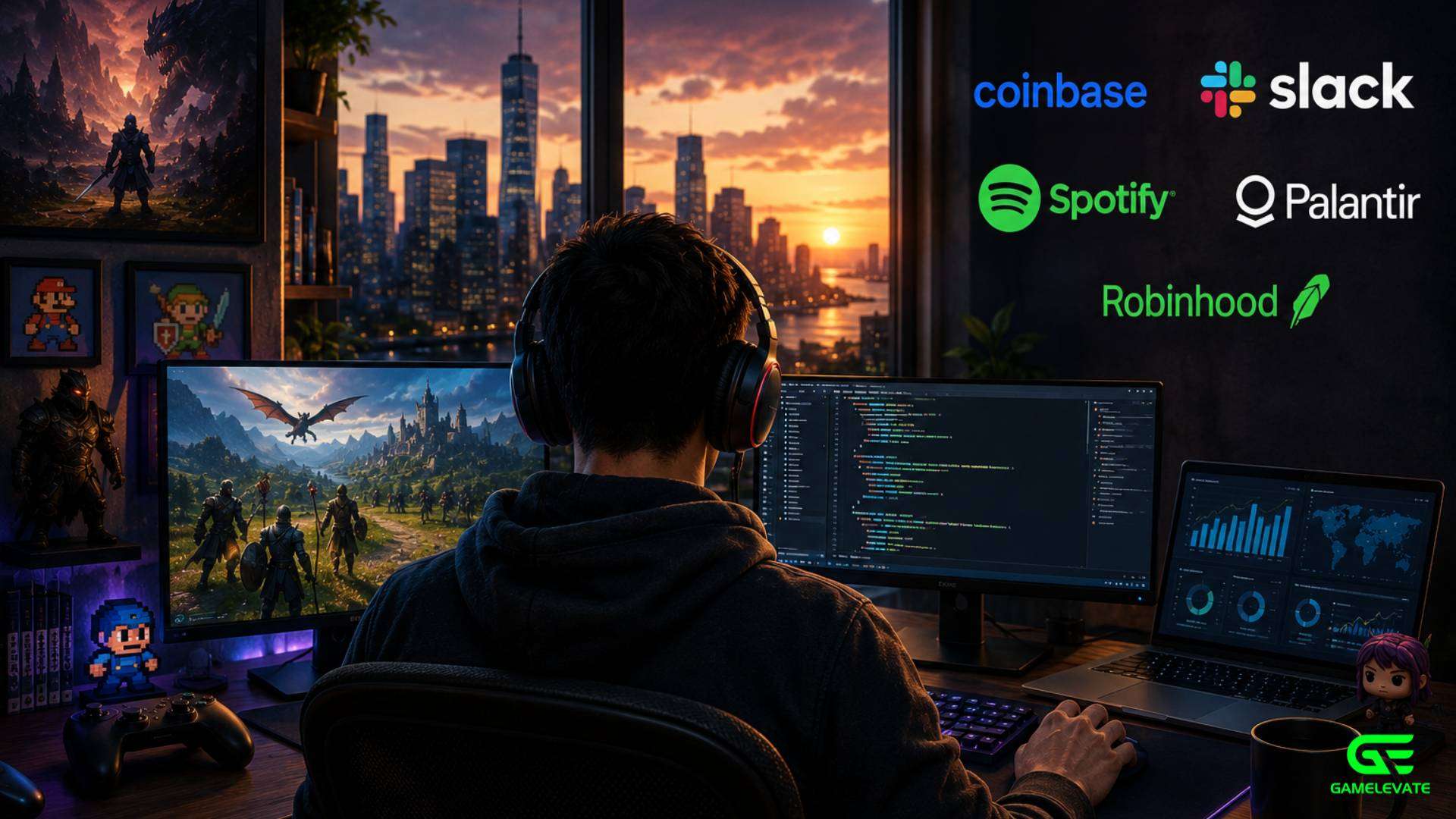
Gaming Skills Are Quietly Powering Some of Tech’s Biggest Companies.
Gaming is no longer just entertainment. A growing number of investors and analysts now believe gaming may also be one of the strongest training grounds for future tech founders.
A recent report examining venture-backed exits between 2015 and 2025 found that founders with gaming backgrounds appeared in roughly 6.7% of billion-dollar startup outcomes. That includes connections to companies like Coinbase, Slack, Spotify, Palantir Technologies, and Robinhood.
The topic has gained more attention recently as gaming-focused investors continue discussing the overlap between gaming culture and entrepreneurship. Venture capital firm Konvoy Ventures also hosts the gaming industry podcast Game Changers on Apple Podcasts, where founders and gaming executives regularly discuss innovation inside the gaming ecosystem.
From Failed Games to Massive Tech Platforms
One of the clearest examples is Stewart Butterfield.
Before building Slack, Butterfield worked on an online multiplayer game called Glitch. The game failed commercially, but the internal communication software built for the development team eventually evolved into Slack itself. Salesforce later acquired Slack for nearly $28 billion.
The report also highlights founders who moved directly from gaming studios into major technology companies.
Miki Kuusi previously worked at Supercell before co-founding food delivery company Wolt. Nathan Rodland worked on Halo projects at Bungie before helping launch Robinhood.
Even Drew Houston reportedly started his early programming career through online gaming communities and game security testing.
The pattern continues across the broader tech sector. The report argues that gaming environments naturally attract people who enjoy solving systems-based problems. That mindset can later translate into software engineering, fintech, logistics, AI development, and product design.
Competitive Gaming Builds Different Skills
The report places heavy emphasis on competitive gaming and strategy-based thinking.
Peter Thiel became a highly ranked chess player during his youth. Joe Lonsdale also won multiple scholastic chess championships before moving into computer science and venture capital.
Meanwhile, Fred Ehrsam spent thousands of hours playing World of Warcraft competitively during high school. He later connected his fascination with virtual economies to his interest in cryptocurrency systems.
To many gamers, this connection feels obvious.
Games often reward optimization, long-term planning, leadership, risk management, teamwork, and rapid decision-making. MMO economies and strategy games also teach players how systems interact under pressure. Those skills can translate surprisingly well into technology startups and finance.
Games like EVE Online have even become famous for their complex player-driven economies and political structures. Some analysts have compared them to real-world financial markets because of how players trade resources, manage alliances, and coordinate large-scale operations.
Gaming Culture Keeps Expanding
The relationship between gaming and entrepreneurship continues to grow.
Gaming-focused investment firms like The Games Fund have openly stated that they prioritize founders with authentic gaming backgrounds and experience inside the industry.
Meanwhile, gaming investors like Moritz Baier-Lentz continue pushing the idea that gaming is becoming deeply connected to AI, media, entertainment, and broader technology innovation.
That shift is becoming harder to ignore.
Today, esports athletes train professionally. Streamers build multi-million-dollar media brands. Modders become developers. Competitive gamers move into cybersecurity, AI, software engineering, and fintech roles.
Universities are also expanding esports and gaming programs at a rapid pace. Schools increasingly view gaming as a gateway into coding, engineering, digital media, and leadership development rather than simply entertainment.
From our perspective, one thing is becoming very clear. Gaming is no longer sitting on the edge of tech culture. It is actively helping shape the next generation of builders, operators, and entrepreneurs.
That overlap also explains why games like League of Legends, World of Warcraft, and EVE Online continue attracting highly analytical players. These games demand strategy, communication, resource management, and leadership under pressure. Those are skills that matter far beyond gaming itself.